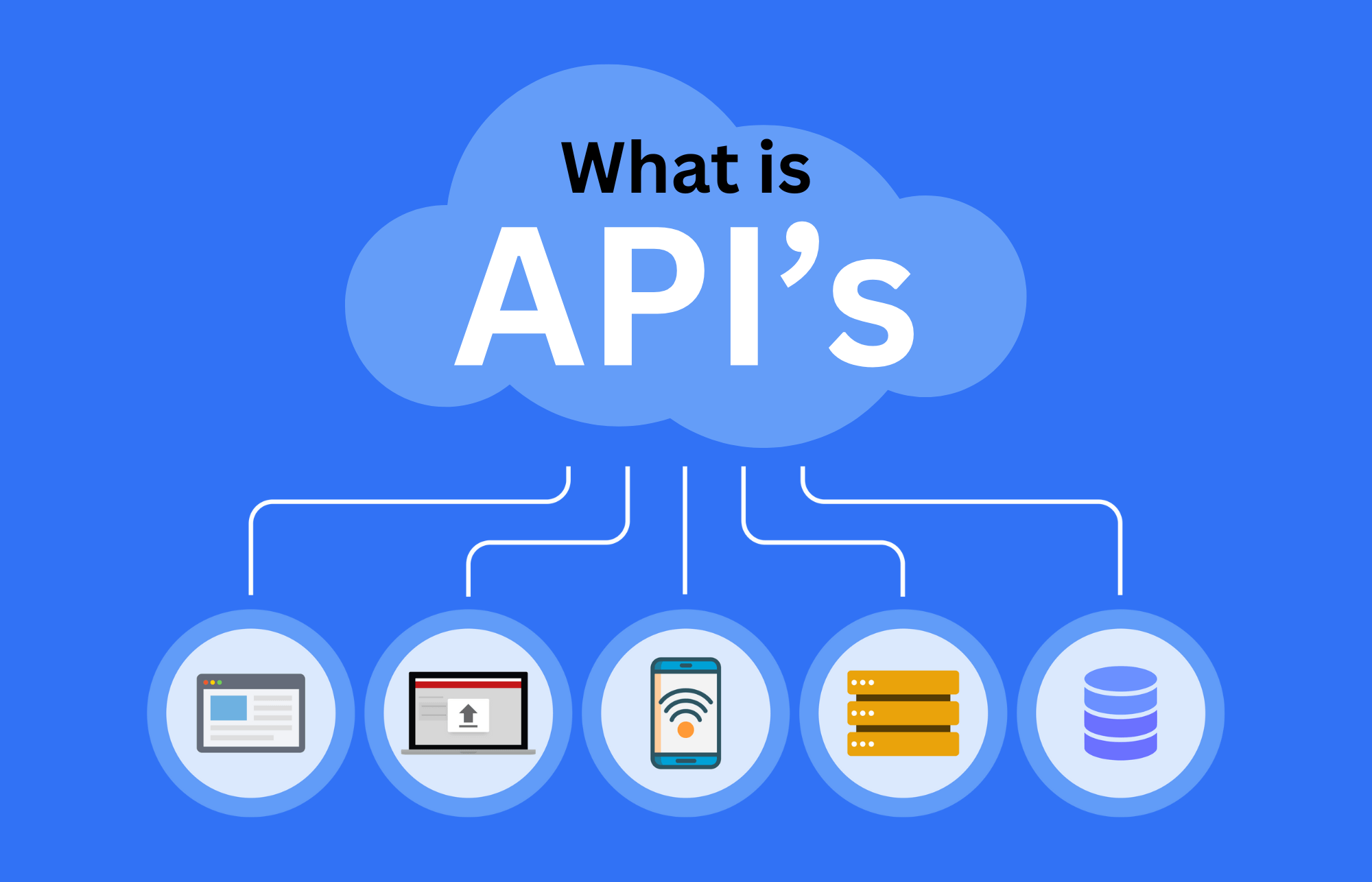
In today's interconnected digital world, Application Programming Interfaces (APIs) have become the invisible backbone that powers our modern web experience. When you use Facebook to log into your favorite pizza app, see live weather updates on your phone, or check real-time flight prices on travel sites, you're witnessing APIs in action. These crucial technological bridges enable seamless communication between disparate software systems, creating the integrated digital experiences we've come to expect.
Consider this staggering statistic: API-based services account for more than 80% of all global internet traffic . This dominance highlights how essential APIs have become in connecting our digital ecosystem. Whether you're a developer, business owner, or simply tech-curious, understanding what APIs are and how they work is fundamental to navigating today's digital landscape.
What Exactly is an API?
An API (Application Programming Interface) is a set of defined rules and protocols that enables different software applications to communicate with each other . Think of it as a contract of service between two applications, specifying how they should interact through requests and responses .
A perfect real-world analogy is the restaurant experience: you (the client) interact with the waiter (the API) who takes your request (order), communicates it to the kitchen (the server), and returns with your response (the meal). Just as you don't need to know kitchen logistics to enjoy your dinner, applications don't need to understand each other's internal complexities to exchange data through APIs.
This abstraction is powerful. As one industry expert explains, "APIs abstract the underlying program and encapsulate it in a way that enables the client application to easily consume its services" .
How Do APIs Actually Work?
APIs operate on a fundamental client-server model . The application sending the request is called the client, and the application sending the response is called the server . This relationship creates a seamless cycle of communication:
1. Request Initiation: A client application (like your weather app) sends a request to the API endpoint
2. API Processing: The API interprets the request and formulates appropriate commands for the server
3. Server Response: The server processes these commands and prepares the requested data
4. Data Transmission: The API receives the server's response and packages it in a client-friendly format
5. Client Reception: The formatted response reaches the original application for use
This entire process typically happens in milliseconds, enabling real-time data exchange across different platforms and devices .
A perfect example is third-party payment processing. When you click "Pay with PayPal" on an e-commerce site, the site uses APIs to securely communicate with PayPal's systems without redirecting you away from the page—creating a seamless user experience .
API Protocols: REST, SOAP, RPC, and More
As APIs have evolved, several protocols and architectural styles have emerged to standardize how they operate:
REST APIs
REST (Representational State Transfer) has become the most popular web API architecture today . REST APIs are built around several key principles:
1. Statelessness: Each request contains all necessary information, with no stored client context between requests
2. Resource-based architecture: Data and functionality are organized as resources accessible via unique URLs
3. Standard HTTP methods: Uses GET (retrieve), POST (create), PUT (update), and DELETE (remove) operations
REST's simplicity, flexibility, and scalability make it ideal for web services and mobile applications .
SOAP APIs
SOAP (Simple Object Access Protocol) represents a more formal, protocol-heavy approach . Unlike REST, SOAP:
1. Uses XML for all message formats
2. Supports multiple transport protocols including HTTP and SMTP
3. Features built-in error handling and strong typing
SOAP's robustness makes it well-suited for enterprise environments with strict security requirements, such as financial services .
Other API Protocols
1. RPC (Remote Procedure Call): Focuses on action-based operations rather than resource manipulation, ideal for internal microservices communication
2. WebSocket APIs: Enables bidirectional communication between client and server, perfect for real-time applications
3. GraphQL: A modern query language that lets clients request exactly the data they need in a single request

Real-World API Applications: Powering Your Digital Life
APIs have become so ubiquitous that we interact with them dozens of times daily, often without realizing it:
Universal Logins
The ability to log into various websites using your Facebook, Google, or Twitter credentials is powered by authentication APIs . These APIs enable secure verification without exposing your actual login credentials to third-party sites.
Travel Booking Comparisons
Travel aggregation sites like Kayak and Expedia rely heavily on APIs to collect real-time availability and pricing information from thousands of hotels and airlines . This API-driven approach lets you compare countless options in seconds rather than visiting each provider separately.
Navigation and Mapping Services
When you use Google Maps or Apple Maps to find directions, you're interacting with sophisticated mapping and geolocation APIs . These services combine core mapping data with real-time traffic information, points of interest, and route optimization—all delivered through various APIs.
Social Media Integration
Businesses often embed live social media feeds on their websites using social media APIs . The Instagram API, for example, allows businesses to display their Instagram grid directly on their website, with automatic updates as new posts are published.
IoT and Smart Devices
The Internet of Things ecosystem depends entirely on APIs for functionality . Smart refrigerators use APIs to connect to recipe applications, internal cameras use APIs to send images to your phone, and voice assistants use APIs to control other smart devices in your home.
The Business Value of APIs: More Than Just Technology
Beyond their technical function, APIs deliver significant strategic business benefits:
Integration and Agility
APIs enable organizations to integrate new applications with existing software systems rather than building from scratch . This approach significantly accelerates development timelines and reduces costs while leveraging existing investments.
Innovation and Expansion
Businesses can quickly adapt to market changes and deploy innovative services by making changes at the API level without rewriting entire systems . APIs also present unique opportunities to meet client needs across different platforms, expanding market reach .
Maintenance and Security
The API acts as a protective gateway between systems . Each system can make internal changes without impacting the other party, so long as the API interface remains consistent. This abstraction also enhances security by limiting data exposure to only what's necessary for specific queries .
API Security: A Critical Consideration
Like any technology, APIs introduce potential security risks that must be managed. The OWASP API Security Top 10 outlines the most critical API vulnerabilities that organizations need to address .
Essential API security measures include:
1. Authentication tokens to verify user identity and access rights
2. API keys to identify and monitor applications making API calls
3. Rate limiting to prevent abuse and ensure service availability
4. Encryption (SSL/TLS) to protect data in transit
Security is a shared responsibility between frontend and backend. While APIs handle backend security, implementing frontend security best practices provides crucial additional protection layers .
Creating and Consuming APIs: A Developer's Perspective
For developers, working with APIs typically involves several key stages:
API Design and Planning
Successful APIs begin with careful planning using specifications like OpenAPI . Designers must consider different use cases and ensure the API adheres to current development standards.
Building and Testing
API prototyping typically involves boilerplate code that developers later customize . Rigorous testing is essential to prevent bugs and vulnerabilities, including performance testing and security validation against cyber attacks .
Documentation and Marketing
Comprehensive API documentation acts as a crucial guide for developers, significantly improving usability and adoption . Well-documented APIs with diverse functions tend to be more popular in service-oriented architectures .
Consumption and Integration
To use an existing API, developers typically:
1. Obtain an API key by creating a verified account with the provider
2. Set up an HTTP API client to structure requests
3. Refer to API documentation to understand syntax and capabilities
4. Implement the API in their codebase
When working with API data in frontend applications, understanding concepts like scope in JavaScript becomes essential for properly managing data visibility and accessibility across your application .
Similarly, when processing API responses, developers must choose appropriate JavaScript array methods. Understanding the difference between map() and forEach() is crucial here: map() creates a new transformed array without mutating the original data—perfect when you need to modify API response data for display—while forEach() simply iterates without returning anything, better suited for operations like logging or updating external states .
The Future of APIs
As technology continues to evolve, APIs are adapting to new paradigms and requirements:
1. GraphQL is gaining popularity for its efficiency in handling complex data requirements
2. gRPC is becoming the go-to for high-performance microservices communication
3. WebSocket APIs are enabling real-time bidirectional communication for collaborative applications
4. API marketplaces are creating new economic opportunities for API providers and consumers
The continued growth of microservices architecture, serverless computing, and edge computing will further cement APIs' central role in software development.
Conclusion: The Invisible Bridges of Our Digital World
APIs have fundamentally transformed how software is built and integrated. From enabling seamless payment processing to powering real-time weather updates and universal login experiences, these invisible bridges make our interconnected digital world possible.
For businesses, APIs represent opportunities for innovation, expansion, and efficiency. For developers, they provide building blocks to create rich applications without reinventing the wheel. And for users, they deliver the seamless, integrated experiences we've come to expect from modern software.
As technology continues to advance, APIs will undoubtedly play an even more central role in shaping our digital future. Understanding what they are and how they work is no longer just for developers—it's essential knowledge for anyone navigating today's technology landscape.
Want to learn more about securing your web applications? Check out our article on 7 Essential Frontend Security Best Practices to Protect Your Web App.
Comments (0)
No comments yet. Be the first to comment!